Key Takeaways
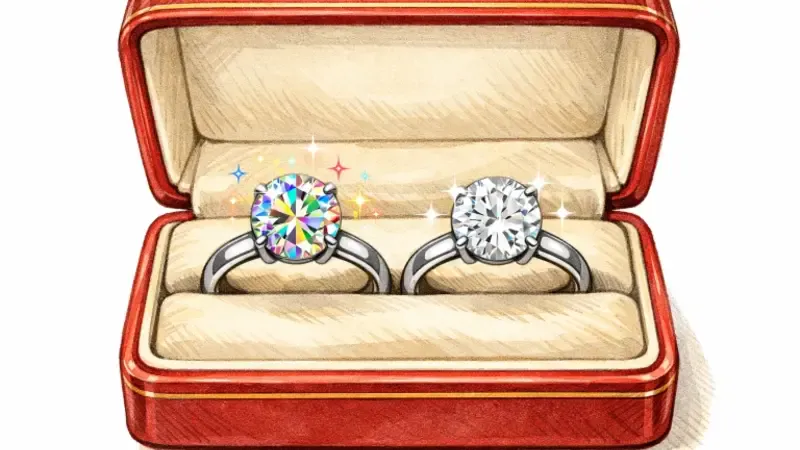
- Moissanite has a fiery, rainbow-like sparkle, while lab-grown diamonds provide a traditional, white brilliance.
- Lab-grown diamonds are composed of pure carbon and replicate natural diamonds; moissanite is made from silicon carbide.
- Both options are durable enough for daily wear; lab-grown diamonds are slightly harder on the Mohs scale.
- Moissanite is commonly more affordable, allowing buyers to choose a larger stone for a similar price.
Table of Contents
- Introduction
- Composition and Formation
- Brilliance and Sparkle
- Durability and Hardness
- Color and Clarity
- Price and Value
- Ethical and Environmental Considerations
- Making Your Choice
Choosing the ideal gemstone is a significant step in creating a memorable piece of jewelry. When seeking brilliance, affordability, and ethical value, many buyers now look beyond traditional mined diamonds to lab-grown diamonds and moissanite. Both stones offer striking brilliance and can be set in a range of stunning jewelry designs. Before making a final decision, be sure to compare the differences between moissanite and lab diamond to find the best match for your needs.
Understanding these gemstones’ unique qualities, composition, and price points helps ensure your choice aligns with your style and values. While both lab-grown diamonds and moissanite are created in laboratories, they differ in appearance, cost, and composition. With the right information, you can confidently select a gemstone that will hold both beauty and significance for years to come.
Appearance is just one aspect to consider. Many people value ethical sourcing and environmental responsibility when choosing an engagement ring or unique jewelry piece. Learning how these stones measure up in terms of hardness, sparkle, and sustainability is key to making an informed purchase decision.
As you navigate your options, think about daily wear, long-term care, and which qualities matter most. Both moissanite and lab-grown diamonds offer stunning alternatives to traditional stones. The main differences come down to optical performance, cost, and meaning for today’s buyers.
Composition and Formation
Lab-grown diamonds are formed by simulating natural diamond growth conditions in a controlled laboratory. Each stone consists of pure carbon atoms arranged in a tight crystal lattice, which is why these diamonds are physically and chemically identical to those extracted from the earth. The two primary production techniques are high-pressure, high-temperature (HPHT) and chemical vapor deposition (CVD), both of which result in gem-grade diamonds.
Moissanite, first discovered in a meteor crater, is composed of silicon carbide. Natural moissanite is extremely rare, so virtually all jewelry-grade moissanite is now laboratory-created. Years of scientific advances have enabled manufacturers to synthesize moissanite crystals to maximize clarity and brilliance, resulting in gemstones that dazzle in modern jewelry settings.
Brilliance and Sparkle
The visual impact of moissanite and lab-grown diamonds is often the deciding factor for buyers. Moissanite’s refractive index (2.65 to 2.69) is even higher than a diamond’s (2.42), resulting in unmatched fire, a phenomenon that scatters light into rainbow colors. This intense sparkle captures attention, especially in sunlight or under bright lighting.
Lab-grown diamonds exhibit a more traditional brilliance. Their sparkle primarily displays white reflections with subtle flashes of color, which many associate with classic diamond jewelry. The “fire” in a diamond is more subtle, making it a timeless choice for those who prefer understated elegance in their gemstones.
Durability and Hardness
Durability refers to a gemstone’s resistance to scratches and abrasions over time. Lab-grown diamonds, just like natural diamonds, are rated a 10 on the Mohs scale. This rating marks them as the hardest material found in nature, making them an excellent choice for engagement rings and daily-wear jewelry.
Moissanite, though slightly less hard, scores an impressive 9.25 on the Mohs scale. This means it can withstand everyday use and retain its luster without chipping or showing wear. Both gems are strong options for buyers who want both elegance and practicality in their jewelry.
Color and Clarity
Lab-grown diamonds come in a wide array of color grades and are often graded using the same scale as mined diamonds, from D (colorless) to Z (noticeable color). High-quality lab diamonds are frequently found in the D to F range, appearing icy white to the unaided eye. Clarity is also graded according to standard industry criteria, giving buyers many choices based on size, price, and preferences.
Moissanite is generally produced as near-colorless, although some gemstones may exhibit faint green or yellow undertones when viewed under certain lighting. New production processes have yielded moissanite stones that come closer than ever to diamond’s natural colorlessness, making them increasingly popular for bridal and fine jewelry.
Price and Value
Moissanite is typically much more affordable than lab-grown diamonds, with many buyers drawn by the prospect of selecting a larger or more intricate stone within their budget. This cost-saving advantage means consumers can often purchase a more substantial center stone or a higher-quality setting without exceeding their budget.
Lab-grown diamonds, while still less expensive than mined diamonds, are priced higher than moissanite. They offer lasting value and authenticity for buyers who want a true diamond but are conscious of cost and sustainability. Each stone’s price depends on carat weight, cut, color, and clarity, allowing meaningful customization for any special moment.
Ethical and Environmental Considerations
Modern jewelry buyers are increasingly aware of the origins of their pieces. Both moissanite and lab-grown diamonds eliminate many of the environmental harms and ethical concerns associated with traditional diamond mining, such as displacement, habitat loss, and funding of conflict. Lab-created options are conflict-free and have a much lower ecological footprint, helping consumers feel confident about their choices.
For those prioritizing sustainability, either gemstone offers peace of mind. However, it’s wise to research producer transparency and the lab’s environmental policies to ensure ethical practices extend across the entire supply chain.
Making Your Choice
The perfect gemstone depends on your vision, values, and lifestyle. Moissanite appeals to buyers who appreciate vivid sparkle and affordability, enabling impressive stones within a modest budget. Its visual fire and resilience have made it an increasingly sought-after alternative to traditional diamonds.
Lab-grown diamonds provide the timeless look and authenticity that many desire. If you value classic diamond brilliance, tradition, and are willing to invest a bit more, you may find lab-grown diamonds to be the optimal choice. Regardless of which route you choose, understanding the unique strengths of both gemstones ensures your jewelry purchase will bring lasting joy and elegance.