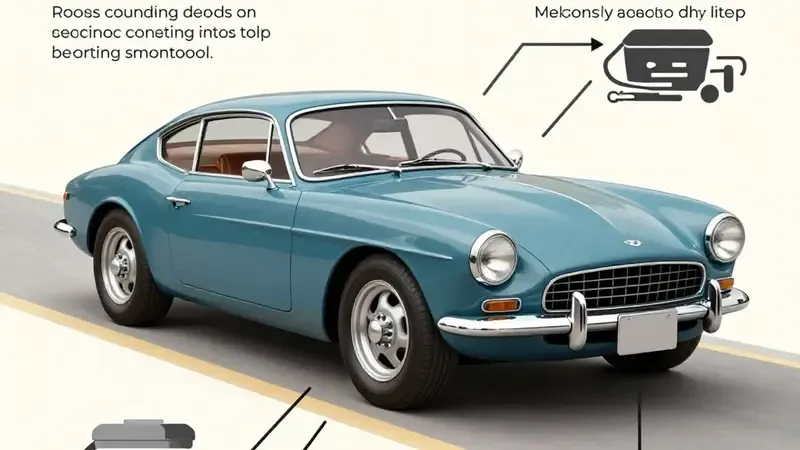
A classic car can feel perfect on an open road, then suddenly becomme stressful the moment traffic slows down. The engine still sounds good, the car still has character, and nothing may seem obviously wrong at first, but the temperature gauge starts creeping upward with every red light. That is why many owners begin researching causes, cooling upgrades, and chimera motors reviews before deciding how serious the problem really is.
Overheating in traffic is not always a sign that the whole cooling system has failed. Sometimes it comes down to one weak part. Other times, several small issues stack together until the system cannot keep up anymore. The tricky part is that classic cars were built for a different driving world. Long idle times, dense traffic, warmer pavement, and modern driving expectations can reveal weaknesses that never showed up during easy cruising.
The good news is that this problem is usually understandable. Once you know what is happening inside the engine bay, the issue feels less mysterious and much easier to approach with a clear plan.
Why traffic exposes cooling problems so quickly
When a car is moving at speed, air naturally passes through the front grille and radiator. That airflow helps pull heat away from the coolant before it cycles back through the engine. In traffic, that natural airflow drops dramatically, but the engine keeps producing heat. That imbalance is the heart of most low-speed overheating problems.
At idle, the cooling system depends much more heavily on the fan, shroud, radiator condition, coolant movement, and engine tune. If the fan does not pull enough air, the radiator cannot shed heat efficiently. If the shroud is missing or poorly fitted, air may move around the radiator instead of through it. If the radiator is old, clogged, undersized, or partially blocked internally, it may not transfer heat well enough when the car is sitting still.
This is why a classic may seem completely fine on the highway but struggle in slow traffic. The problem was not absent at speed. It was simply being masked by stronger natural airflow.
Old parts, modern demands, and the heat trap under the hood
Classic vehicles often have cooling parts that are either aging, outdated, or mismatched after years of repairs and upgrades. A radiator may look fine from the outside, but have internal buildup that restricts flow. Hoses can soften, collapse, or narrow over time. A thermostat may open late or not fully. A water pump may still function, but not move coolant with enough strength to handle heavy idle conditions.
There is also the issue of heat soak. After a classic sits in traffic, heat collects under the hood. Metal parts, exhaust components, the intake area, and surrounding engine bay surfaces all absorb and hold that heat. Once the surrounding temperature rises, every part of the cooling system has to work harder. Even if the outside air is not extreme, the environment under the hood can become intense.
For owners with rare, restored, or heavily customized vehicles, the decision to address overheating is not only about comfort. It is also about protecting the value and drivability of the car. Some owners also think ahead about storage, service visits, restoration timelines, and secure transport options for high-value vehicles when the vehicle needs to be moved safely, especially when reliability is still being sorted out.
When the engine itself is adding extra heat
Cooling parts are not always the only reason a classic runs hot. The engine tune can play a major role. Incorrect ignition timing, a lean fuel mixture, vacuum leaks, or general drivability issues can make the engine produce more heat than it should. When that happens, even a decent cooling system may struggle because it is being asked to manage unnecessary heat.
This is where diagnosis matters. Replacing the radiator might help in some cases, but it will not solve a timing problem. Adding a stronger fan might improve idle temperatures, but it will not fix a lean condition. If repairs become financially impractical, an owner may instead decide to sell a car with an expensive engine problem. A balanced approach looks at both sides of the issue: how much heat the engine is creating and how effectively the cooling system is removing it.
That is why a fair answer is rarely, “Every classic needs a full cooling upgrade.” Some cars need maintenance. Some need tuning. Some need better airflow. Others need a more efficient radiator. Many need a combination of smaller improvements rather than one dramatic change.
The fixes that actually make sense
The best starting point is usually a full inspection of the basic cooling components. Radiator condition, thermostat operation, water pump performance, hose condition, coolant cleanliness, fan strength, and shroud fitment all deserve attention. A car with dirty coolant, old hoses, and a weak fan may not need exotic parts. It may simply need the original system brought back to proper working condition.
Radiator upgrades can be worthwhile when the existing unit is undersized, clogged, poorly matched to the engine, or no longer able to dissipate heat efficiently. However, bigger is not automatically better. The radiator needs to match the vehicle, engine setup, available airflow, and how the car is actually driven.
Fan upgrades can also make a meaningful difference, especially for cars that overheat mainly while idling. A properly selected mechanical fan, electric fan setup, or improved shroud can help pull air through the radiator when the car is not moving. The key word is “properly.” A powerful fan in the wrong position, without good airflow direction, may still disappoint.
Coolant flow matters too. Flushing old buildup, replacing weak hoses, confirming thermostat behavior, and checking the pump can restore performance that was lost gradually over time. None of these steps sound flashy, but they often make the difference between a car that feels fragile and one that feels dependable.
A cooler classic is a more enjoyable classic
Overheating takes the fun out of driving. Instead of enjoying the sound, feel, and personality of the car, the driver ends up watching the gauge and planning escape routes from traffic. That constant worry changes the whole experience.
The right fix brings confidence back. It lets the car idle more calmly, handle slower roads with less stress, and feel more usable instead of delicate. Just as importantly, it protects the engine from repeated heat cycles that can lead to bigger mechanical problems over time.
Classic cars will always have more personality than modern vehicles, and that is part of their appeal. They may need more attention, better maintenance, and smarter upgrades, but they do not have to feel unpredictable. With the right diagnosis and a complete-system mindset, an overheating problem can become a solvable mechanical issue rather than a constant source of anxiety.